


An Overview of Technology’s Contribution to Scientific Progress reveals how technological innovations have revolutionized the way scientists explore, analyze, and understand the world. From early mechanical tools to modern artificial intelligence systems, technology has consistently pushed the boundaries of knowledge and discovery.
In the past, scientific research relied heavily on manual observation and limited instruments. Today, advanced technologies such as supercomputers, satellites, biotechnology, and automation allow scientists to analyze enormous datasets, simulate complex systems, and conduct once impossible experiments.
Technology has not only accelerated scientific discovery but has also improved accuracy, efficiency, and collaboration across global research communities. Fields such as medicine, physics, environmental science, and space exploration have dramatically advanced due to technological breakthroughs.
This article provides an overview of technology’s contribution to scientific progress, examining how innovations shape research methods, improve experimentation, and enable groundbreaking discoveries that benefit humanity.
An Overview of Technology’s Contribution to Scientific Progress in Modern Research
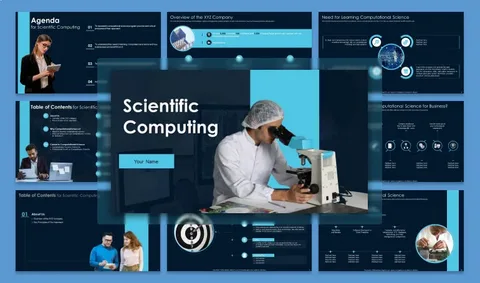
Technology has fundamentally changed how scientists conduct research. Modern laboratories now use sophisticated instruments, automated systems, and digital platforms to perform complex experiments with greater precision.
Some major contributions include:
-
High-performance computing for data analysis
-
Advanced imaging technologies
-
Automated laboratory equipment
-
Digital collaboration platforms
These technologies help scientists analyze complex systems faster and with greater accuracy.
For example, modern particle accelerators and telescopes generate massive datasets that would be impossible to analyze without advanced computing technologies.
How Technology Accelerates Scientific Discovery
Scientific discovery has accelerated dramatically due to technological innovation. Researchers can now test hypotheses, run simulations, and gather data at speeds unimaginable just a few decades ago.
H3: Big Data and Advanced Analytics
Modern research produces enormous amounts of data. Advanced analytics tools allow scientists to:
-
Process large datasets
-
Identify patterns and trends
-
Predict outcomes
-
Improve decision-making in research
For example, genomic research involves analyzing billions of DNA sequences. Without advanced computing technologies, such analysis would take decades instead of hours.
Artificial Intelligence in Scientific Research
Artificial intelligence is transforming many scientific disciplines. AI systems can analyze data, detect anomalies, and even generate research hypotheses.
Applications include:
-
Drug discovery in pharmaceutical research
-
Climate modeling
-
Disease diagnosis
-
Material science innovation
AI-driven systems can analyze complex patterns much faster than humans, making them powerful tools in scientific progress.
Technology in Medical and Health Sciences
One of the most impactful examples of technology’s contribution to scientific progress can be seen in healthcare and medicine.
Technological innovations have revolutionized medical research and patient care.
H3: Medical Imaging and Diagnostics
Technologies such as MRI, CT scans, and ultrasound allow doctors and researchers to observe internal structures of the human body without invasive procedures.
Benefits include:
-
Early disease detection
-
More accurate diagnosis
-
Better treatment planning
H3: Biotechnology and Genetic Engineering
Biotechnology tools such as CRISPR gene editing have opened new possibilities in genetics research.
These technologies help scientists:
-
Study genetic diseases
-
Develop personalized medicine
-
Improve agricultural crops
The combination of biotechnology and computing power has accelerated biomedical research significantly.
The Role of Technology in Space Exploration
Space exploration is another area where technology has dramatically advanced scientific knowledge.
Advanced spacecraft, satellites, and telescopes enable scientists to study distant planets, stars, and galaxies.
Major contributions include:
-
Satellite-based climate monitoring
-
Space telescopes observing distant galaxies
- Technology and Environmental Science
Environmental science has also benefited greatly from technological advancements.
Researchers now use technology to monitor ecosystems, analyze climate change, and develop solutions for environmental challenges.
Key technologies include:
-
Satellite imaging
-
Environmental sensors
-
Geographic Information Systems (GIS)
-
Climate modeling software
These tools help scientists track deforestation, ocean temperatures, and atmospheric changes on a global scale.
As a result, governments and organizations can make better decisions about environmental protection and sustainability.
